11:34W50
Winter Freeze, Spring Hail, Fall Repairs. When Filing Helps and When It Follows You
How the season shapes whether a homeowners claim is priced against you at renewal, and how a household can build the judgement to decide before the adjuster arrives.
Money4 min
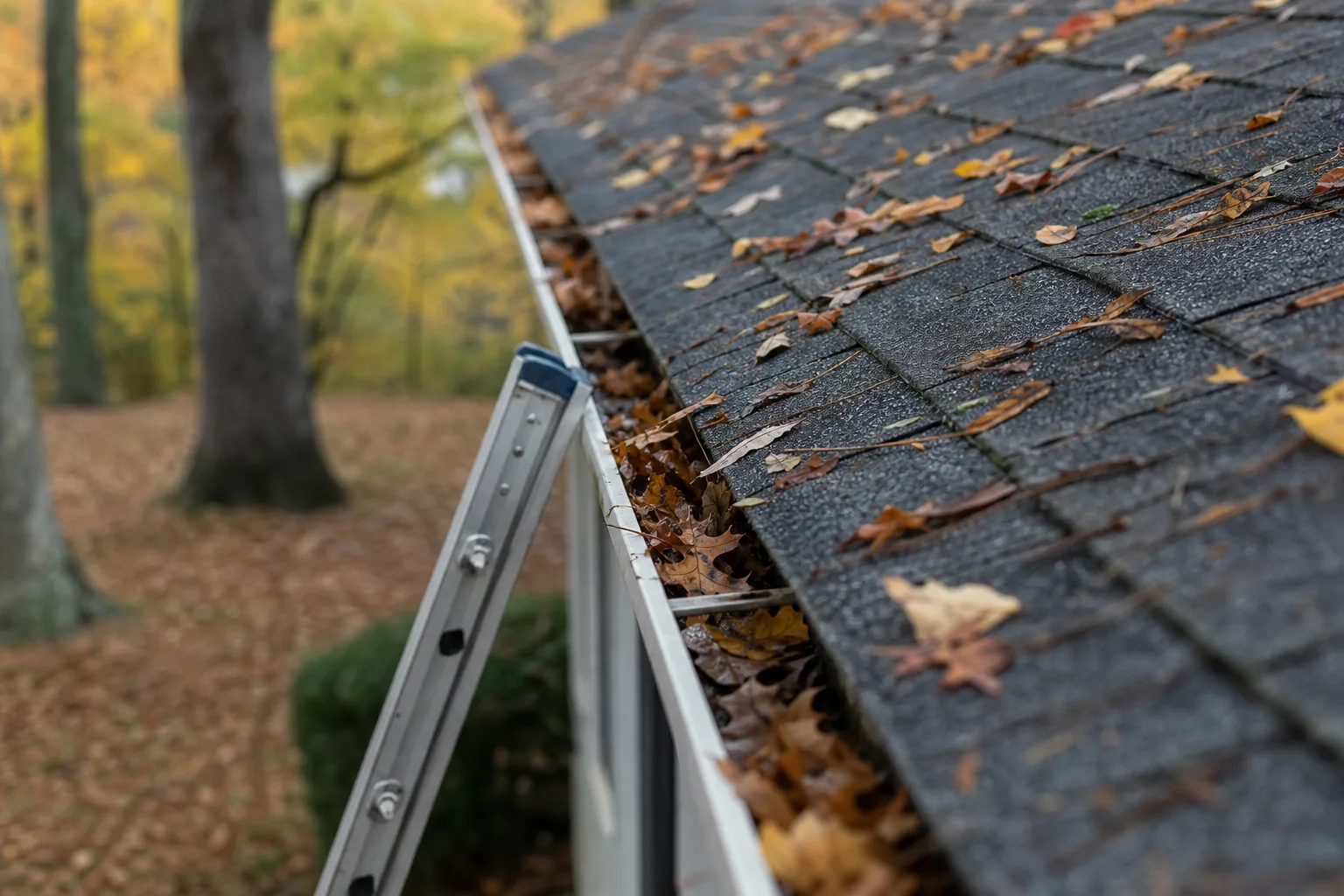
The claim that costs a household the most over ten years is rarely the largest one. It is usually the second small one, filed fourteen months after the first, for a cause the carrier reads as maintenance rather than misfortune. Severity is forgiven more readily than frequency, and the reason is not sentiment but arithmetic: a single catastrophic loss says something happened to you, while three modest losses say something is happening at your address. Learning to tell those apart, before you pick up the phone, is the skill worth building.
What the file records, and who reads it later
Property loss history is retained in shared industry databases, most commonly the CLUE report, and it typically follows the property and the named insured for around five to seven years depending on the reporting practices involved. Two things get recorded that most households do not expect. The cause of loss is written down in a coded category, so a burst supply line and a roof torn off in a windstorm are not equivalent entries even at identical dollar amounts. And in many states a claim that pays nothing can still appear. That second point drives more renewal surprises than any premium table.
You can order your own report at no cost, the same way you order a credit file, and reading it once a year is a twenty minute habit that pays for itself. What you are checking is accuracy, not tone. Carriers occasionally log an inquiry as a claim, code a covered peril under the wrong category, or leave a closed-without-payment file open in the record. Correcting an error while you are not shopping is easy. Correcting one while an underwriter is deciding whether to offer you a policy is a different conversation entirely.
Winter: the season when the cause matters more than the water
Freeze losses are the clearest case where two nearly identical events are priced very differently. A supply line that splits behind a wall during a hard freeze, while the house was heated and occupied, is a sudden and accidental discharge, and it is the kind of loss policies exist to absorb. The same split in a house left at fifty degrees with the water on, unoccupied for two weeks, runs into a clause about maintaining heat or shutting off the supply. The dollar figure on the restoration invoice will look the same. The file will not.
Ice dams occupy the harder middle. Interior water damage from an ice dam is often covered, while the roof and gutter work that would prevent the next one almost never is. A household that claims the ceiling twice in three winters, without ever addressing attic insulation and ventilation, is building a record that reads as a known and untreated condition. The greener fix and the cheaper insurance outcome happen to coincide here: sealing air leaks into the attic and getting the insulation depth right removes the heat that melts the snow, which removes the loss.
Spring and summer: catastrophe coding, and why it changes the calculus
Hail and windstorm claims arising from a declared catastrophe event are generally treated as a separate category by carriers, on the reasoning that a hailstorm crossing four counties says nothing about your judgement as a homeowner. That is the season to file without much hesitation if the damage is real. Roofing is also the area where hesitation costs the most, because a compromised roof degrades quietly, the deadline for reporting is finite, and by the third summer the insurer will fairly ask why the damage was not reported when it happened. Get an independent inspection before the adjuster, not after.
Flood is the one to know cold before June, because it sits outside the homeowners policy entirely and runs through the National Flood Insurance Program, which the Federal Emergency Management Agency oversees. Coverage there is bought separately, typically carries a waiting period measured in weeks, and does not respond to a phone call made while the water is rising. Households in mapped and unmapped zones alike discover this in the same week each year. Buying the policy in a dry March is the whole of the strategy.
Fall: the quarter where you decide what you will never claim
Autumn is when the small losses cluster: the first heating cycle exposes a cracked flue, a windstorm takes a limb into the siding, a slow shower pan leak surfaces once the humidity drops. These are the claims most worth converting into cash repairs. Run the number honestly. Subtract the deductible, then estimate three to five years of surcharge on your current premium, then ask whether the remaining figure justifies a file entry that an underwriter will read the next time you shop. Below roughly one and a half times the deductible, the answer is usually no.
Fall is also the sensible moment to change the structure rather than the behavior. Raising a deductible from one thousand to twenty-five hundred lowers the premium and, more usefully, removes the temptation to file the marginal claim, because the marginal claim no longer exists. Households that make that move tend to pair it with a genuine repair reserve, funded with the premium savings, so that the small autumn loss has somewhere to go. That is the shift from claiming as a reflex to claiming as a decision.
The judgement, held as a standing rule
The households that manage this well are not more knowledgeable about policy language. They have simply decided in advance which losses they will absorb and which they will report, and they revisit that line once a year rather than at eleven at night with a wet ceiling. The rule can be crude: catastrophe-coded weather goes in, sudden water goes in, anything under a set dollar figure gets paid out of pocket, anything that has now happened twice gets fixed at the cause before it is claimed again.
Write the rule down, tell the other adult in the house what it is, and keep the deductible amount somewhere you can reach it in a week. Then call your agent, not the claims line, when you are unsure whether a given event even qualifies, and ask the question hypothetically before any file number exists.