16:18W48
Nobody Will Come Out for a Two-Hour Job. What That Deferral Costs Two Years Later
Trip minimums, membership plans and deposits changed how small repairs get bought, and the deferral they encourage is where the real cost of upkeep now sits.
House & Home5 min
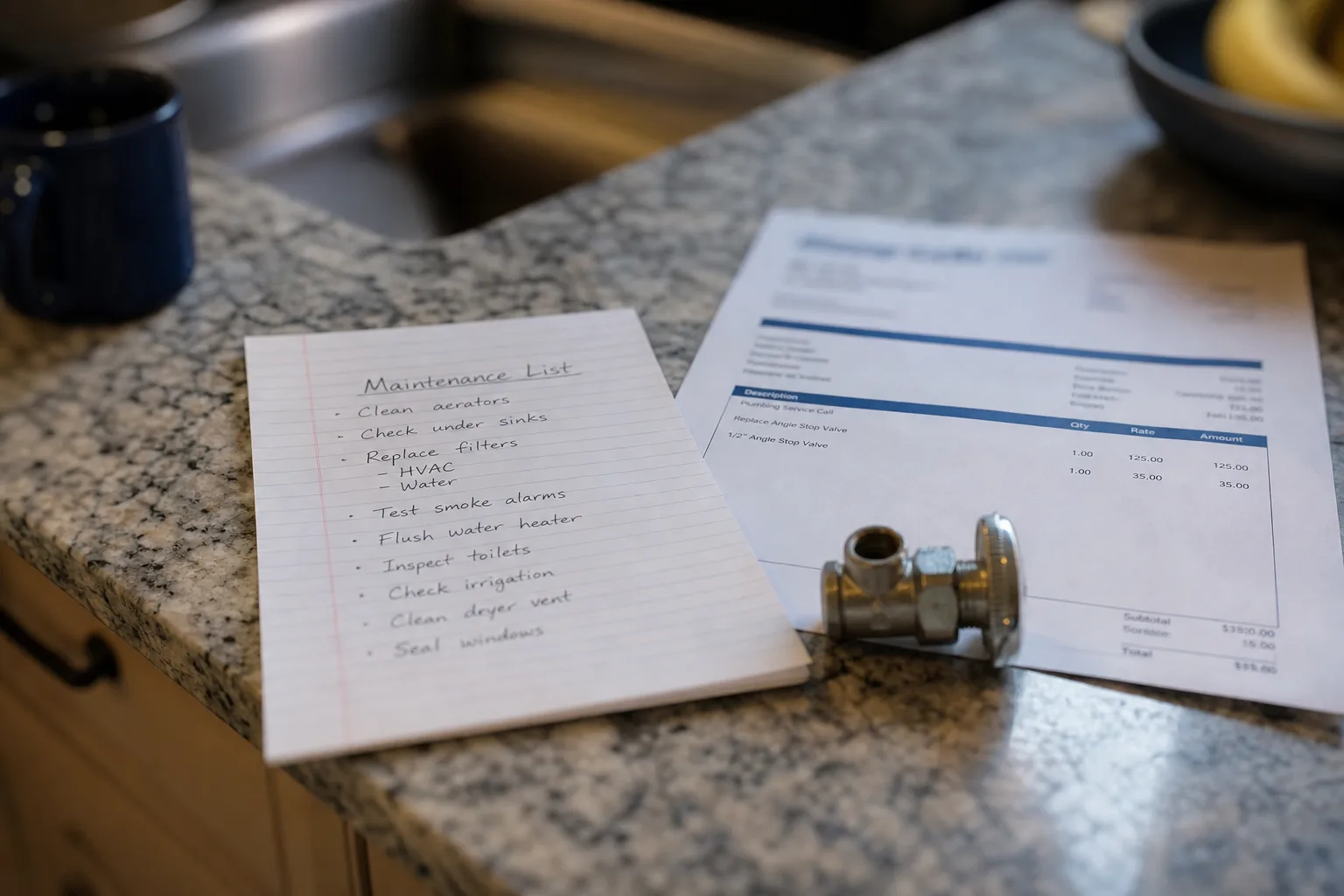
The price of a two-hour repair has not risen nearly as fast as the price of getting a qualified person to show up for one. That gap is the whole story of small neglect right now, and it is invisible on any invoice, because the job that never happened does not generate paper. Ten years ago a homeowner with a weeping shut-off valve, a failing bead of caulk, or a slow floor drain could find someone who would come out, work for ninety minutes, and take a check at the door. The same call today runs into a trip minimum, a scheduling window three weeks out, and a request for money before anyone is dispatched.
The small job stopped being a product anyone sells
What changed is not craftsmanship but the economics of the truck. A service company covers fuel, insurance, a licensed technician's wage, dispatch software and warranty exposure on every visit, and those costs land the same whether the work takes ninety minutes or six hours. The natural response was the minimum charge, which turns a small repair into a purchase where most of the money buys arrival rather than labor. Homeowners noticed immediately. Paying a two-figure sum for a valve and a three-figure sum for the visit feels like being overcharged, even when it is simply the cost of the trip made visible.
The second response was the membership plan, which sells the visit in advance: an annual fee, one or two scheduled inspections, priority booking and a discount on repairs. From the customer's side this is a different kind of transaction entirely, because the money leaves the account months before any wrench turns, and the value depends on whether the company still exists and still staffs well when something finally breaks. Read as a payment structure rather than a service, it is a prepayment held by the contractor against work that may never be requested. Some plans earn it back in a single avoided failure. Others quietly renew for years.
Deposits moved down the price scale
A decade ago, deposits belonged to jobs with material orders attached: cabinets, windows, a roof. Pay-on-completion was ordinary for anything a technician could carry in a bag. That line has drifted. It is now common to be asked for a booking deposit, a diagnostic fee collected at scheduling, or a card on file before a slot is released, on work that would once have been billed at the end. The stated reason is no-shows and cancellations, which are real costs for a company running a route. The practical effect is that the homeowner is funding the visit before the diagnosis, and the leverage that once came with holding payment until the work satisfied has moved to the other side of the table.
That leverage is worth naming, because it is the thing a customer gives up without a line item. The Federal Trade Commission oversees consumer protection in home repair transactions, and the durable advice in that space has always been about what your money is buying at the moment you release it. On a small job, the protection is simple and rarely written down: pay a diagnostic fee if you must, but keep the repair portion payable on completion, and get the scope of the fix in writing by text or email before the technician starts. Contractors who work this way clean up in referrals, because the arrangement reads as confidence.
What deferral actually compounds into
Faced with a minimum that feels disproportionate, most people wait. That is a rational response to the pricing they were shown, and it is where the compounding begins. Failed caulk at a tub-to-tile joint admits a small volume of water on every use, and the sequence is unglamorous and well documented in the trade: the grout softens, the backer board saturates, the subfloor delaminates, and the joist below takes on moisture that supports rot. None of those stages announces itself. By the time the floor feels spongy underfoot, the buyer is no longer purchasing an hour of a handyman's time; they are purchasing demolition, a plumber, a carpenter, a tile setter, and a schedule that pushes a bathroom out of service for a week.
The financial character of the job changes as much as the size of it. A two-hour repair is a single payment against completed work that you can inspect in ten seconds. A four-trade remediation is a contract with a deposit, a progress payment at rough-in, a final payment, and, if the agreement is well written, a retention of five or ten percent held back until the punch list closes. Retention is the customer's only real remedy at that scale, and it exists precisely because the sums are large enough to be worth arguing over. Small neglect converts a transaction you fully controlled into one you manage.
Buying the visit deliberately
The workaround the trade already uses among itself is bundling. Because the minimum buys arrival, the marginal cost of the second and third task on the same visit is close to just labor, so the homeowner who keeps a running list and calls once for six items pays a fraction per item of what six separate calls would cost. Seasonal batching does the same work: dryer vent, gutters, the sticky valve, the exhaust fan that has stopped moving air, all in one window. The list is the product. It converts a pricing structure that punishes single small jobs into one that rewards being organized about them.
The other move is to separate diagnosis from repair on purpose. Pay for the assessment, take the written scope, and decide on timing with real information rather than a guess about severity. Plenty of small problems are genuinely fine to hold for a season, and a technician who is paid for the hour rather than commissioned on the sale will usually tell you which ones. That distinction, how the person in your house gets paid, explains more about the advice you receive than any credential on the van.
The decision that looked like thrift ten years ago and looks like thrift now are not the same decision. Waiting used to cost you a phone call and a check. It now costs you a deposit, a schedule and a retention clause, which is a good reason to keep the list short and the visits regular.