12:18W46
Changed Your Mind and Can't Find the Contract? Test the Backup Before You Need It
The everyday cost of an untested backup is rarely a lost photo library; it is a cancellation window you cannot prove you met, under a rule that varies by state.
Digital4 min
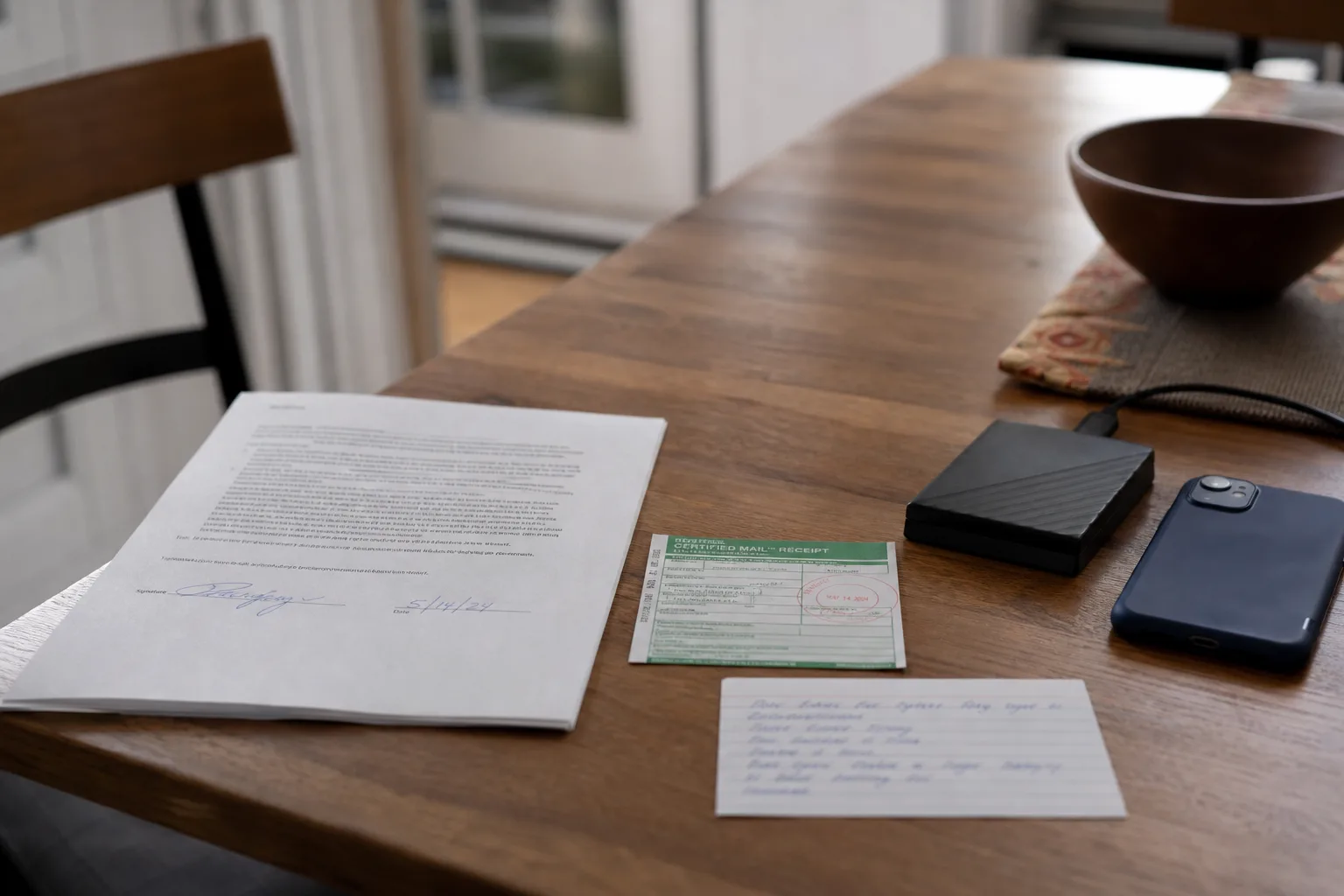
The moment a backup matters is almost never the moment people picture. It is not a ransomware screen or a stolen laptop. It is a Tuesday, four days after signing, when someone decides against the roof, the gym membership, the timeshare tour, or the kitchen, and needs to produce the signed agreement, the salesperson's card, the text message that promised a start date, and the dated notice they sent. All of it lived on one phone. The phone went into a sink. What is lost is not sentiment. It is leverage, and often a deposit.
The consequence people rarely trace back to the backup
Cancellation rights are documentary rights. You exercise them by sending a specific notice, to a specific address, inside a specific window, and later by showing that you did. When a household cannot retrieve the contract, they cannot cite the clause; when they cannot retrieve the cancellation notice or the receipt for the certified mailing, they cannot rebut a seller who says nothing arrived. The seller's records are intact, because a business keeps records as a matter of routine. The consumer's are on a device with no working restore. That asymmetry decides more small disputes than any argument about fairness.
The same pattern shows up in places that feel unrelated to computers. A property tax appeal turns on the comparable sales you saved in March. An insurance adjuster asks for photographs of the finished bathroom taken before the leak. A contractor licensing complaint asks for the estimate as written, not as remembered. In each case the paperwork existed and then quietly stopped existing, because syncing was mistaken for backing up and nobody ever asked the system to give a file back.
What a tested backup actually looks like
Testing means restoring, not confirming that a green checkmark appeared. Pick three files you would genuinely need under pressure: the signed contract PDF, a photograph from two years ago, and a spreadsheet. Restore them to a device other than the one that made the backup, ideally with the original powered off, and open each one. Note how long it took and what you had to remember. Most failed restores fail on credentials, not on media. The password to the encrypted archive is in the password manager, and the password manager's recovery key is on the machine that died.
Then repeat it on a schedule you will actually keep, twice a year, alongside something else you already do, like changing smoke detector batteries or assembling tax records. Keep one copy off the property, because the risks that destroy a laptop tend to be the risks that destroy the drawer next to it. Write down, on paper, where the copies live and what unlocks them. The National Institute of Standards and Technology is responsible for the federal guidance that shapes how organizations think about recovery, and the durable part of that thinking is unglamorous: a backup you have never read back is a hypothesis.
The clock that binds you is usually local
Here is where geography stops being trivia. The Federal Trade Commission oversees the federal Cooling-Off Rule that covers certain door-to-door and off-premises sales, and it sets a short window measured in days. State law sits on top of that, and it is not uniform. Several states give longer or additional rights for particular categories, health club contracts, hearing aids, home solicitation sales to older adults, timeshare purchases, and some require the seller to hand you a dated cancellation form in a prescribed size of type. Which rule applies depends on where the contract was signed, where the property sits, and sometimes which of the two is more protective.
Local rules also set the deadlines you never negotiated. Assessment appeal windows are county business and can be a matter of weeks after notices mail. Mechanic's lien notice periods differ state to state. Data breach notification timelines, and the rules requiring businesses to dispose of your records securely, are largely state statutes with real variation in trigger and timing. The practical consequence is that the retention period for your own documents should be set by the shortest fuse in your jurisdiction, not by a habit picked up somewhere else.
Setting retention so the backup answers the question
Keep contracts, change orders, and proof of any notice you sent for the full duration of your state's limitations period for written agreements, which is commonly measured in years rather than months. Keep closing documents and improvement receipts for as long as you own the property, because they affect basis when you sell and the IRS expects substantiation rather than recollection. Keep photographs of finished work, dated, in the same folder as the invoice that paid for it. File by transaction, not by file type. A restore is only useful if you can name what you are looking for.
The households that get their deposit back are rarely the ones who argued best. They are the ones who opened a folder, found the signed page and the certified mail receipt inside the window their state allows, and sent both without a search. That capability is built on an ordinary afternoon, months before anyone changes their mind.