16:00W37
Think the First Legal Meeting Starts When You Sit Down? Ask Who Read Your File First
Most people prepare a story for the attorney and ignore the paralegal who builds the file, which is where a first consultation is quietly won or lost.
Legal Affairs4 min
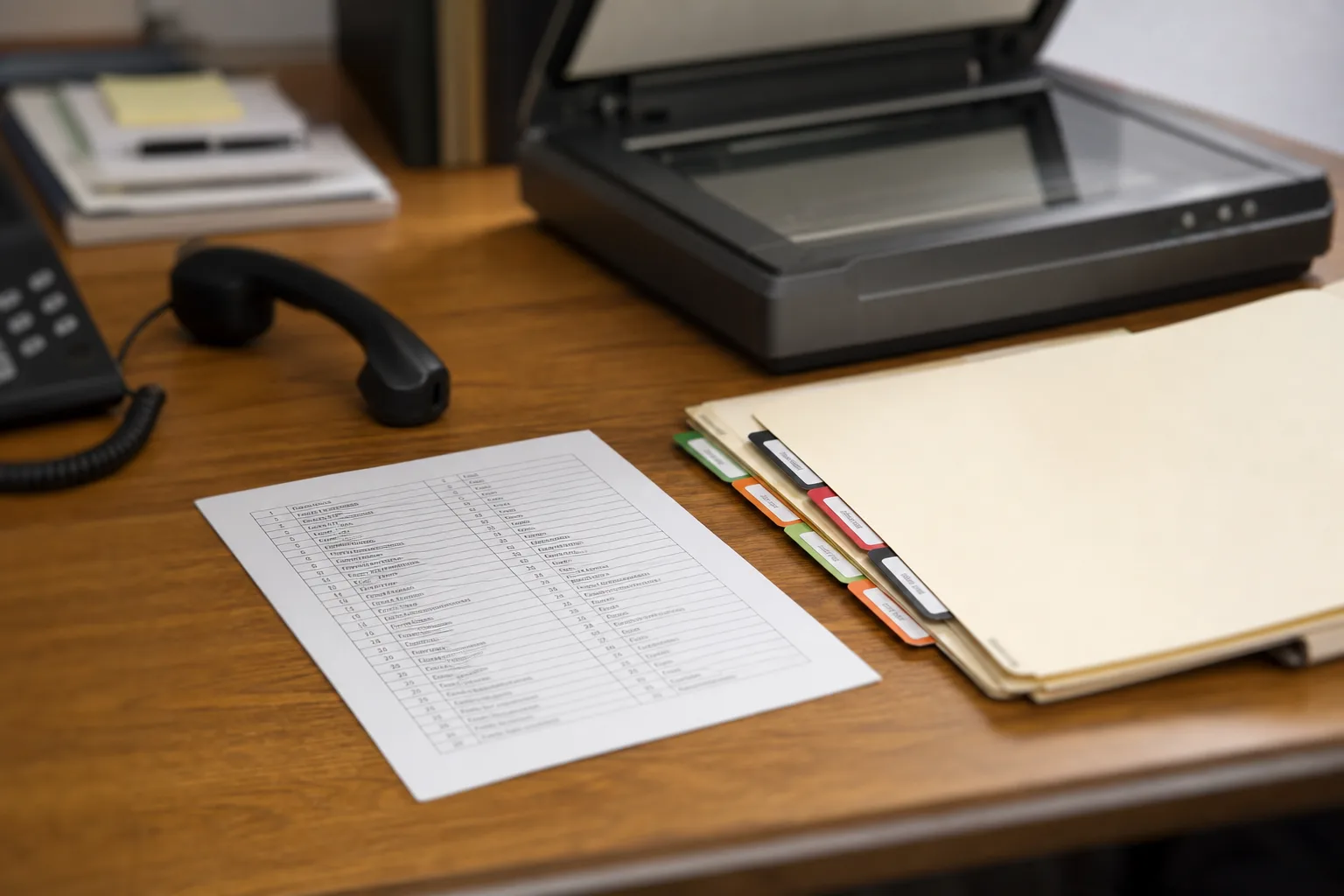
The common assumption about a first legal meeting is that preparation means being able to tell the story well: dates roughly right, grievance clearly felt, the whole thing delivered in the ten or fifteen minutes before the attorney starts asking questions. That is not wrong so much as late. By the time you are talking, most of what determines whether the hour produces a plan has already happened, in a conflict check, an intake form, and whatever you sent ahead. Attorneys will rarely say this outright, because the story matters to them too. It just matters second.
The person who opens your file before the attorney does
In almost any firm larger than a solo practice, and in plenty of solo practices too, the first person to handle your matter is a paralegal, an intake coordinator, or a legal assistant who does all three jobs under one title. They run the conflict check against the firm's client list, they open the matter number, they scan or route whatever you brought, and they decide, often without being asked, what order the attorney sees it in. Clients overlook this person almost universally. They are polite to them and then wait for the real meeting to start.
That is the party in the transaction most people miss, and the mistake is expensive in a quiet way. A paralegal who understands your matter in the first ten minutes will build a chronology, flag the date that looks like a deadline, and put the contract on top with the signature page tabbed. A paralegal who receives an unsorted email with fourteen phone photographs attached will spend an hour making that legible, and depending on the firm, that hour is billed at a paralegal rate or absorbed into a flat fee that was quoted on the assumption it would not be needed.
Three ways clients arrive, and what each one costs
The first is the narrative arrival: no documents, or a couple, and a well-rehearsed account of what happened. It feels like preparation because it took effort. What it produces is an hour of the attorney asking for things you do not have with you, followed by a second meeting. The account is useful, but an attorney cannot advise on your memory of a contract term. They can only advise on the term.
The second is the box. Everything, in no order, sometimes literally in a banker's box, sometimes as a shared drive folder named after the month you created it. This arrival is generous and it is the one that most reliably burns money, because someone has to impose an order on it and that someone is being paid. Firms differ on whether they mind. Some would genuinely rather sort it themselves than have a client discard the one page that mattered, which is a real risk and worth taking seriously.
The third is a chronology and an index. Two pages of dates with a one-line description of each, then the documents numbered to match. It takes a client an evening. It changes the meeting from discovery into analysis, because the attorney reads the chronology in four minutes and spends the remaining fifty-six telling you what your position actually is. Ask the intake staff which of the three they want before you assume the third is welcome; a few practice areas, family law in particular, prefer to build the timeline themselves.
Paper, PDF, and where the label is doing the work
There is a persistent idea that sending everything digitally is both the modern courtesy and the greener choice. Half of that holds up. A 300 megabyte folder of individual phone photographs, each one a separate file named IMG underscore four digits, is not a lower-burden delivery than a tidy paper folder; it is the same sorting problem moved onto someone else's screen, and the firm will print a working set anyway, because attorneys mark up paper. The environmental claim in that case is the label doing all of the work while the actual paper consumption stays roughly where it was.
What genuinely reduces both the paper and the billed time is a single searchable PDF, pages in date order, named with your last name and the matter. Scan at a resolution that lets text be searched rather than one that makes each page a photograph. Keep your originals; send copies. If you have a signed contract, an insurance policy, a lease, or correspondence from the other side, those four categories should be separable at a glance, because they will be looked at separately.
What to fix before you arrive, and who to ask
Call the office and ask the non-attorney who answers three questions: what they need in advance, in what format, and by when. Ask whether the consultation fee is credited against the engagement. Ask what a matter like yours usually costs to take to a first decision point, understanding that the honest answer is a range with conditions attached. If your dispute involves a lender, a servicer, or a debt collector, know that the Consumer Financial Protection Bureau is the federal agency responsible for that market, and that a complaint record there is part of the file your attorney will want to see.
Then write down, in one sentence, what outcome you would accept. Not the outcome you want. The one you would sign.
The paralegal who takes that call will remember your name for a reason that has nothing to do with charm. Files that arrive in order get worked on first, because they can be. That is not a rule anyone publishes, and every firm runs on it.