09:43W36
Want Out of Something You Signed? The Four Documents That Make the First Meeting Count
When you are trying to cancel a contract, the first meeting with a lawyer goes badly without the signed copy, a dated chronology, the money trail and the cancellation attempt itself.
Legal Affairs5 min
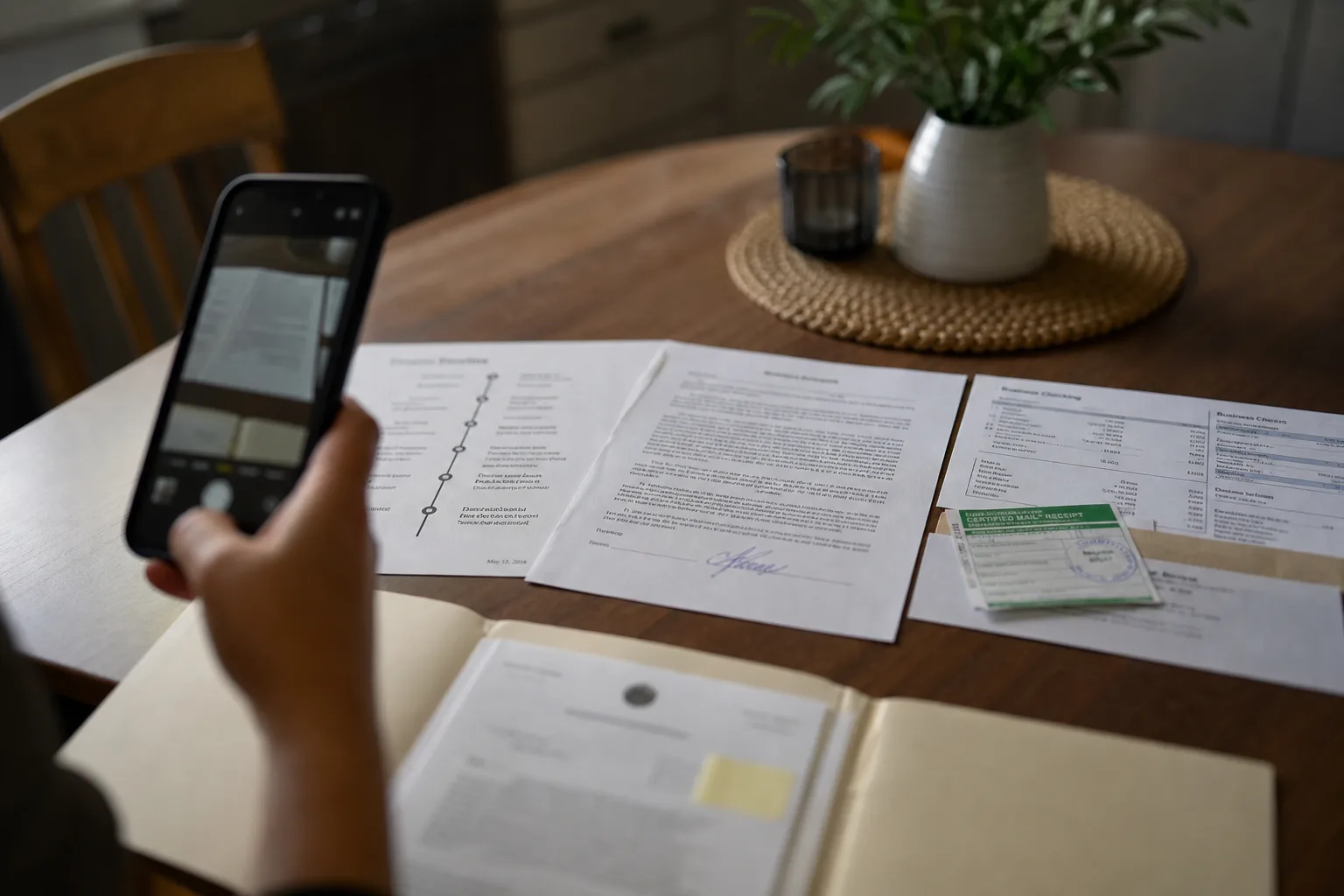
People arrive at a lawyer's office to talk about backing out, and they almost always arrive with the story rather than the paper. The story is the part they have rehearsed: the salesperson who would not leave, the roof crew that started the wrong job, the gym that kept billing after the branch closed. It is the least useful thing in the room. What decides whether you can cancel, and what you forfeit if you do, is a short stack of documents that most households have somewhere in a drawer, an inbox, and a bank app, in three different formats, none of them talking to each other.
The signed copy comes first, and the version matters
Bring the document you actually signed, not the brochure, not the estimate that preceded it, and not the version the company emailed afterward. Those three are often different, and the difference is sometimes the whole case. A signed contract usually carries the terms that govern cancellation on a back page or a second screen, in a paragraph headed something like termination, default, or liquidated damages, and that paragraph decides whether your deposit is a down payment against work or a fee the company keeps for holding a slot. If you signed electronically, download the completed certificate the platform generates, because it records timestamps that your memory will get wrong.
If you cannot find the signed copy, ask the other side for it in writing before the meeting. That request is not a concession, and it is not a negotiation; you are entitled to a copy of what you put your name to, and companies produce it routinely. Send the request by email so it is dated. When a company stalls on producing a signed agreement, that reluctance is itself information a lawyer will want, and it changes the shape of the advice you get in the first half hour.
A one-page chronology beats an hour of talking
Write the sequence of events on a single page, in date order, with nothing in it but dates and facts. First contact, home visit, signature, deposit paid, first delivery, first problem, first complaint, response, second complaint. No adjectives, no characterization, and no explanation of why someone behaved badly. If you do not know an exact date, write the week and mark it as approximate rather than guessing precisely, because a confident wrong date that later collapses will cost you credibility with your own attorney before it costs you anything with the other side.
This page does two jobs at once. It saves you paying professional rates for narration, and it makes the deadline question answerable in minutes rather than at the end of a long conversation. Cancellation rights run on clocks: some start at signature, some at delivery, some at the moment written notice is received. The Federal Trade Commission oversees the federal cooling-off protections that apply to certain door-to-door and off-premises sales, and state law adds its own rules for particular contracts, from home improvement work to health clubs to timeshares. Every one of those clocks needs a start date, and your page supplies it.
The money trail is a separate file from the paperwork
Print or export the payment record: the deposit, any progress payments, financing documents, and every automatic charge that has posted since. Bank and card statements are better evidence than your own summary, because they carry the merchant descriptor and the settlement date, and those two details resolve arguments about whether a payment was ever received. If you paid by card, note the date of each charge, since card networks run their own dispute windows that are shorter than most legal deadlines and close quietly while you are still deciding whether to hire anyone.
Separate what you have paid from what you are still obligated to pay. Households routinely conflate the two, and the conflation makes the decision look worse than it is. Forfeiting a deposit hurts, but the real number is the deposit plus the remaining installments minus whatever you would have to spend anyway to get the work done by somebody else. Write those figures down before the meeting. A lawyer who can see your actual exposure on paper will tell you plainly whether the fight is worth its own cost, which is the answer most people are really paying for.
The cancellation attempt you already made is evidence
Almost everyone tries to get out informally first. A phone call, a text to the crew leader, a message through the company's contact form. Collect those, and note the ones you cannot recover, because a phone call with no record is close to worthless and a lawyer needs to know that up front rather than discovering it later. Screenshot text threads with the timestamps visible, and export emails as PDF rather than forwarding them, since forwarding strips headers that establish when a message was sent and who else received it.
If you sent written notice, bring proof of how it went out and where it landed. Certified mail receipts, delivery confirmations, read receipts, and the address you used all matter, because many contracts name a specific notice address and a specific method, and notice given the wrong way is sometimes treated as no notice at all. This is the single most common place a household loses a cancellation right it genuinely had. It is also the easiest to fix in advance, since a properly addressed second notice sent before the meeting costs a few dollars and can preserve the position while you take advice.
Tools that keep one household's file from scattering
Use your phone's scanner rather than photographs, because scanning apps flatten pages, crop edges, and produce a searchable file that a law office can actually open. Name each file the same way every time: date first in year-month-day order, then a short description, so the folder sorts itself chronologically without any effort from you. Keep everything in one cloud folder that you can share by link, and put the same set on a flash drive or in a physical binder in the same order. Two copies in two formats is the household version of a document management system, and it is enough.
Bring the chronology and an index printed on paper, even if everything else is digital. In a first meeting, someone will want to flip between the signature page and a payment date, and flipping is faster than scrolling on a laptop nobody at the table controls. Write your three questions at the bottom of the chronology page: what can I still cancel, what does it cost me if I do, and what has to happen this week. Those questions, asked against a complete file, turn a consultation into a decision you can act on the same afternoon.
The households that get the most out of a paid hour are rarely the ones with the strongest position. They are the ones who walked in able to hand over a signed contract, a dated page, a payment record, and proof of what they already tried, and who left knowing exactly which clock was still running.