16:48W41
Hurt in a Crash and Meeting a Lawyer Next Week? What to Bring and What It Costs
The consultation is free, the representation is not, and the difference is decided by the fee agreement, the case costs line, and the file you walk in holding.
Legal Affairs5 min
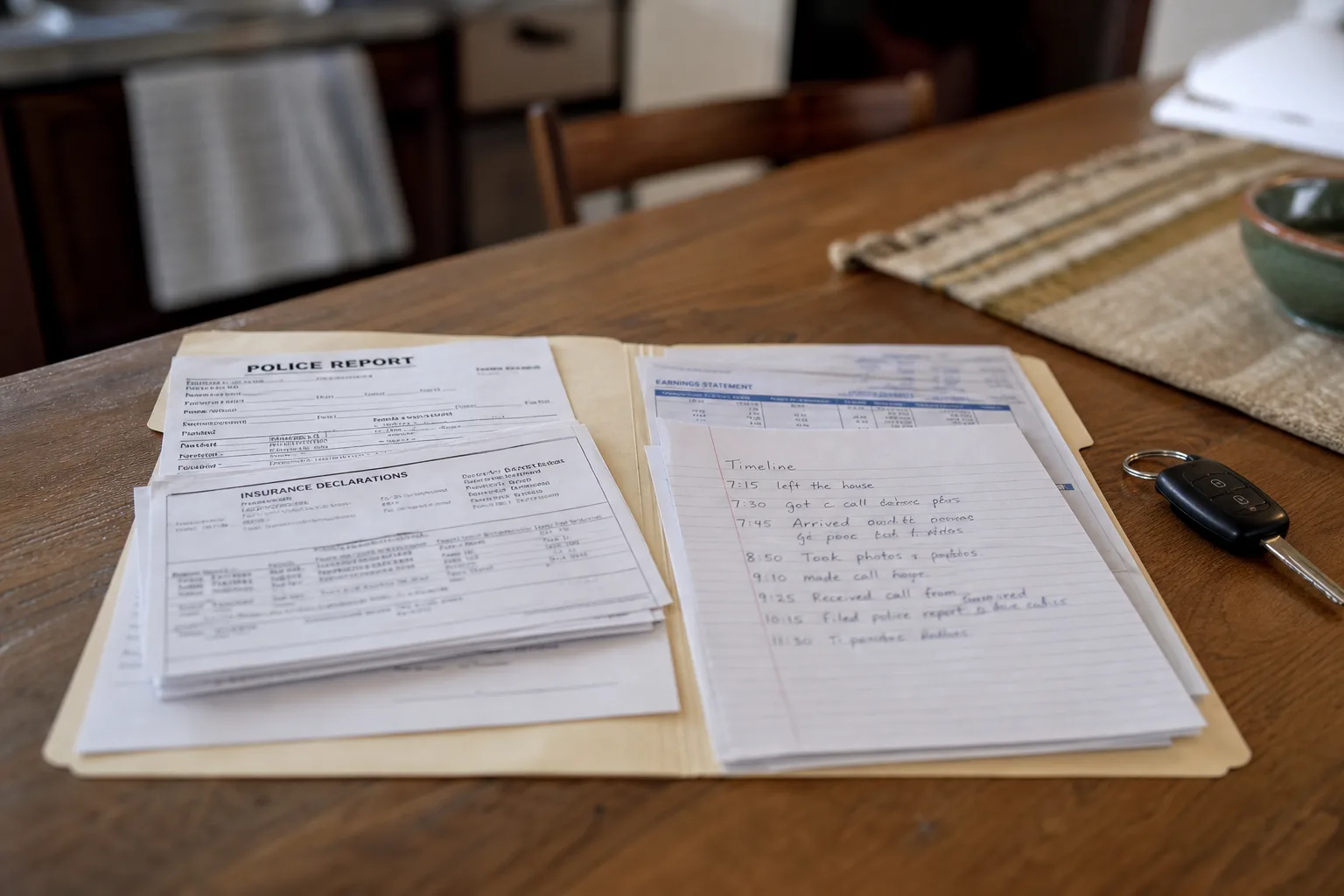
People who have been through this more than once arrive with a folder and a short list of questions, and they get a different meeting than people who arrive with a phone full of photographs and a story to tell. The story matters, but it is not what the hour is for. An injury consultation is an assessment of whether a claim is worth money, who will pay it, and what it will cost to collect, and almost every part of that assessment runs on paper you already have or can get in a week. The preparation is unglamorous. It also moves the decision forward by about a month.
The meeting is free and the representation is priced differently than you expect
Most injury firms do not bill the first conversation, which confuses people into thinking cost is not yet a subject. It is the main subject. Representation in these cases is normally taken on contingency, meaning the fee is a percentage of what is recovered, nothing is owed if nothing comes in, and the percentage is written into an agreement you sign at or shortly after that first meeting. Two numbers in that agreement decide most of what you take home: the percentage itself, and whether it rises once a lawsuit is filed. Ask about both before you sign anything, because the second one is where repeat clients look first.
Case costs are the separate line, and they are not the fee. Filing fees, deposition transcripts, medical record retrieval, accident reconstruction, expert reports, and sometimes a courier service all get advanced by the firm and then repaid out of the recovery. A simple claim that settles with an adjuster may generate very little of this. A disputed liability case with two experts and three depositions generates a great deal. The question worth asking plainly is whether costs come off the top before the percentage is calculated or after, and what happens to advanced costs if the case recovers nothing.
What actually drives the number
Three things move the cost of an injury case more than anything a client controls. The first is whether fault is genuinely contested, because a rear-end collision with a police report and an admission needs no reconstruction while a disputed intersection case may need a specialist, a scene inspection, and a day of testimony. The second is the size and clarity of the medical picture, since treatment that is continuous and documented is cheaper to prove than treatment that stopped for four months and resumed. The third is the insurance available, which caps the realistic outcome regardless of how badly you were hurt.
There is a fourth, quieter driver: liens and reimbursement claims. If a health plan, a government program, or a hospital paid your bills, somebody will want repayment out of the settlement, and resolving that can take months of correspondence that happens after the money is nominally agreed. An experienced personal injury lawyer will raise this in the first meeting rather than at the end, because it changes the net figure substantially and clients who hear it early do not feel ambushed later. The tax side is usually simpler than people fear, though the IRS is the authority on how different components of a settlement are treated, and it is worth a direct question when lost wages or interest are part of the recovery.
The folder that shortens the meeting by half
Bring the police report or the report number and the responding agency, the names and insurers of everyone involved, and your own declarations page, not just your insurance card. The declarations page shows your liability limits, your medical payments coverage, and whether you carry uninsured or underinsured motorist coverage, which in a surprising number of cases is the only pocket that will actually pay. Bring the list of every provider you have seen since the incident, including the urgent care you visited once, with dates. You do not need the records. You need the names, because the firm will order the records and billing itself.
Then bring the wage material. A recent pay stub, the dates you missed, and your supervisor's name establish the lost earnings claim faster than any description of your job. If you are self-employed, bring the prior year's return, since that is what an adjuster will ask for anyway. Photographs of the vehicle, the scene, and visible injuries should be in one place rather than scattered across a camera roll, and the date stamps matter. Finally, write down a plain chronology of the first seventy two hours. Memory for sequence degrades quickly, and the sequence is frequently the disputed part.
The questions that only get good answers if you ask them early
Ask who will actually handle the file day to day, because the attorney you meet and the attorney who negotiates your settlement are not always the same person, and there is nothing wrong with that as long as you know it going in. Ask how the firm communicates and how often, which sounds soft but predicts most of the frustration clients report later. Ask what the firm would need to see within sixty days to feel good about the case. Ask whether they have handled this particular defendant or insurer before. And ask, directly, what they think the case is worth and why they cannot tell you yet.
If you change your mind after signing
You are allowed to. A contingency agreement is not a life sentence, and a client can discharge a lawyer at nearly any point, though the consequences differ depending on when. Discharge in the first days, before records are ordered and costs advanced, and the usual result is that you owe nothing or close to it. Discharge after months of work and the former firm may assert a lien for the reasonable value of what it did, payable out of any later recovery, which does not necessarily cost you more overall but does mean the next firm will want that resolved in writing before it takes the file. Some agreements also contain their own short cancellation window; read for it.
The practical version of this is simple. Do not sign at the first meeting if you intend to see another firm, because nothing is lost by waiting a few days and a great deal of awkwardness is avoided. Statutes of limitation are measured in years in most injury matters, not weeks, so the pressure to sign immediately is rarely coming from the calendar. If a firm cannot explain its fee agreement in terms you can repeat back to someone at your kitchen table, that is useful information gathered at no cost. The folder you assembled travels with you to the next meeting unchanged.
The people who get the most out of a first consultation treat it as a working session rather than an audition, and they leave with three things written down: what the firm will do in the next thirty days, what they personally owe the firm in documents, and the exact arithmetic that turns a settlement figure into a check. That is an hour well spent, whoever ends up holding the file.