11:05W39
Equipment Pulled on Day Three? The Readings That Decide Whether You Pay to Dry Twice
Drying a wet house is billed by the day, and the moisture log is what turns those days into money. Here is how to read one before you release payment.
House & Home4 min
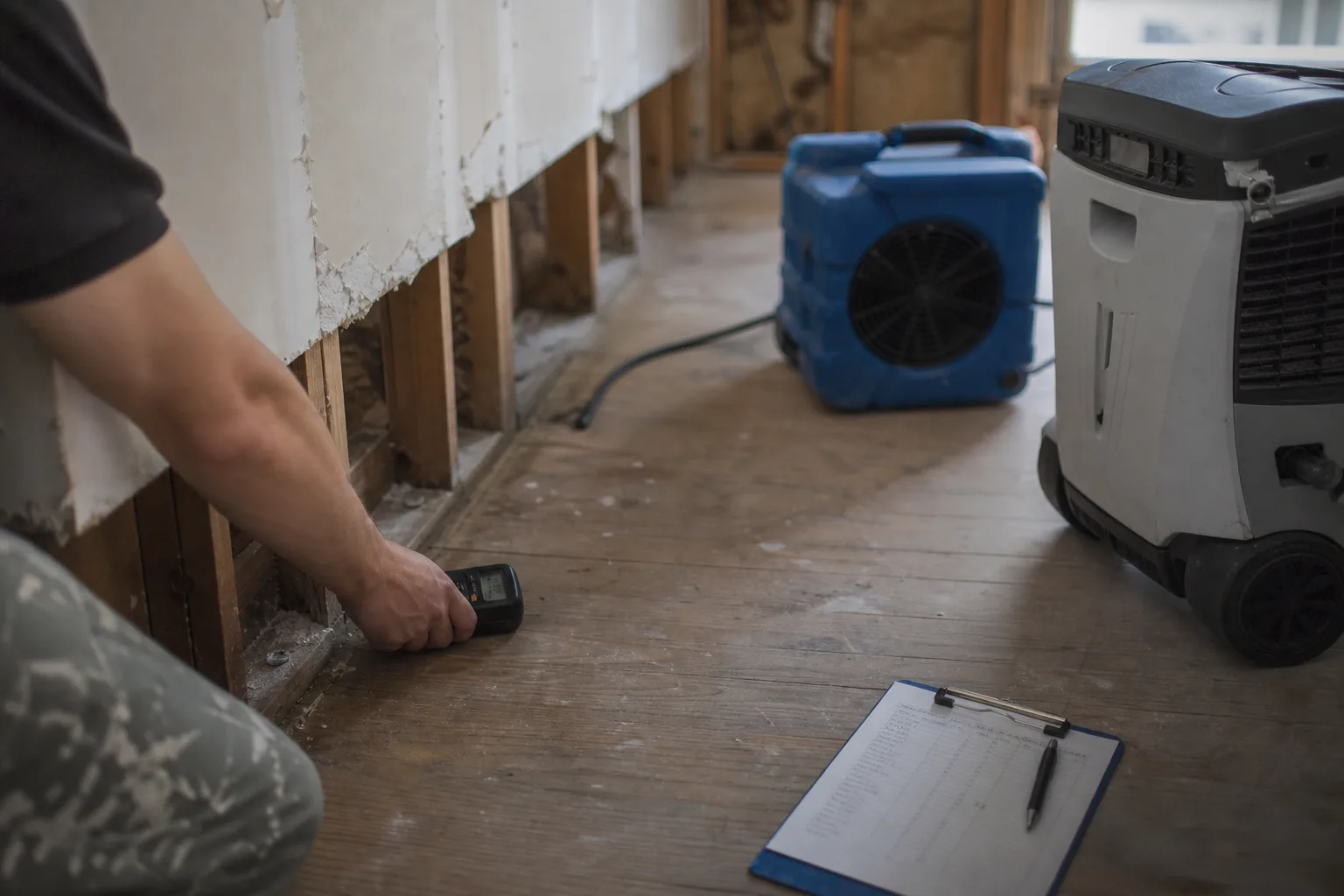
A drying crew that finishes in three days and a drying crew that finishes in six can both be right, and they can both be wrong. The difference is not speed, and it is not the number of fans parked in your hallway. It is whether someone measured the wet materials against a defined target, wrote the numbers down each day, and stopped only when the readings said stop. That record is also the thing your invoice is built from, which means the document that protects the building and the document that justifies the bill are the same piece of paper.
What a drying plan should say before anyone bills a day of it
Ask on the first visit for the affected area in square feet, the class and category the crew has assigned, the materials they intend to dry in place, and the materials they intend to remove. Then ask for the dry standard: the moisture content or relative reading they are aiming for, taken from an unaffected part of the same house. Without that reference point, "dry" is an opinion. With it, the endpoint is a number that either arrives or does not. A crew that gives you those five answers without hunting for them has done this before, and the answers cost you nothing to collect.
The Environmental Protection Agency is the federal body responsible for guidance on moisture and mold in buildings, and the whole logic of its approach is that time matters because wet organic material changes character, not because anyone is impatient. That reframes the question you are actually asking a contractor. You are not asking them to hurry. You are asking them to get the water out of the structure before the structure becomes a different job, and to prove the water is gone rather than assert it.
The daily log is the invoice, whether or not it looks like one
Restoration drying is priced in equipment days. An air mover on the floor for four days is four line items, a dehumidifier running five days is five, and the labor is the daily visit to take readings and reposition. So the moisture log is not paperwork sitting beside the bill. It is the bill, written a day at a time. When you see a log with readings falling steadily toward the dry standard and then flattening at it, you are looking at a job that ended when it should have. When you see identical readings copied across four consecutive days, you are looking at either a plateau nobody addressed or a visit nobody made.
Ask for the log daily, not at the end. A photograph of a handwritten sheet in your phone each evening is enough, and asking for it politely on day one sets the expectation cheaply. Readings that stall for two days in a row are a genuine signal: it usually means trapped water behind a cabinet base, under a hardwood floor, or inside a wall cavity that needs a drilled hole or a removed baseboard rather than another fan. Raising it early is how a six-day job avoids becoming a rebuild.
Who is holding the money while your walls are still open
Follow the money and the incentives become legible. On an insured loss, the carrier often pays the mitigation contractor directly against an assignment of benefits you signed in your driveway while the carpet was still squelching. If that is the arrangement, you are not the payer, and your leverage over the finishing details is weaker than you assume. On an uninsured or under-deductible job, you are paying, which means the deposit, the staged releases, and anything held back are yours to structure. Know which of the two you are in before day two, because it changes every conversation afterward.
A workable structure on a self-paid drying job is a modest mobilization deposit covering equipment delivery, a progress payment when the log shows readings moving toward the standard, and the balance released only against a final reading sheet that meets the dry standard the crew named at the start. Keep a small retention against the reinstatement work, the baseboard, the paint, the floor, since that is the part most likely to be left half finished when the next emergency call comes in. Retention is not distrust. It is the ordinary mechanism that keeps a crew coming back.
Building the judgement to say yes or not yet
You are not going to out-argue a technician about psychrometrics, and you do not need to. Your competence lives in three habits: you know the target number, you see the log every day, and you release money against readings rather than against the absence of equipment in your hallway. When a crew proposes to demobilize, the only question is whether the readings match the standard they set. If they do, thank them and pay promptly, because prompt payment on a clean job is how you get the same crew next time. If they do not, ask what the plan is for the two materials still reading high, and expect an answer in materials and hours.
Most crews welcome the customer who does this, because a documented job is the one their own office can bill without an argument and the one that survives an adjuster's review. The homeowner who asks for a dry standard on Monday and a reading sheet each evening turns a chaotic week into a job with a visible finish line, and the money moves in step with the moisture coming out of the building.