18:25W26
Deposit Paid, Cabinets on Order, Crew Gone. Which Parts You Handle Without an Attorney
A stalled kitchen remodel is really a question about who is holding your money, and that question sorts the problems a letter fixes from the ones that need counsel.
Legal Affairs4 min
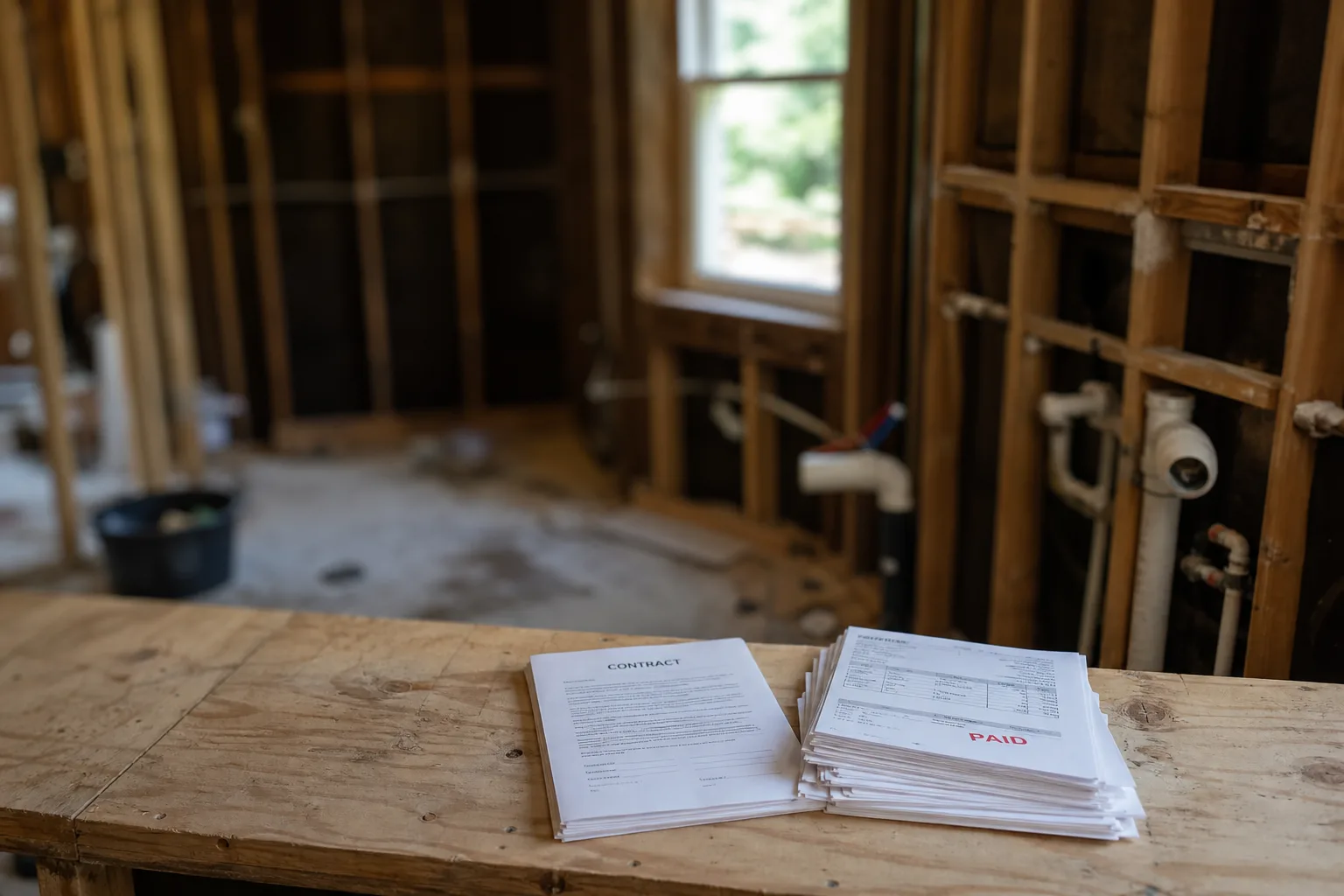
Take one narrow case and hold it still. A homeowner signs for a kitchen remodel, pays a deposit of roughly a third at signing, and pays a second draw when the demolition is done and the cabinet order is supposedly placed. Then the crew stops arriving. Calls go to voicemail, texts get one-word answers about a supplier delay, and six weeks pass with a gutted room and no delivery date. The instinct is to ask whether this is a lawsuit. The better first question is narrower: at this moment, who is actually holding the money, and in what form.
Sort the money before you sort the legal theory
Your deposit is never just missing. It is sitting somewhere, and each location has a different route back. Some of it may be a real deposit with the cabinet manufacturer, recoverable through the supplier if you can get the order number and confirm it exists. Some may have gone to the contractor's payroll on your job, which is not theft and not recoverable, merely spent. Some may be pure float, covering the last customer's materials. Until you know which, every letter you write is a guess, and guesses are what turn a six-week delay into a six-month one.
The order number is the single most useful thing to chase first. Call the cabinet dealer or the manufacturer's customer line, give the job address, and ask whether an order exists, when it was placed, and what has been paid against it. Dealers will usually confirm the existence of an order even if they will not discuss pricing with someone who is not the account holder. An order that exists with a real ship date changes the whole case. An order that was never placed tells you the second draw went somewhere else, and that fact does more work later than any amount of outrage.
The steps that need no attorney at all
If you paid the deposit by credit card, you are inside a billing dispute system that runs on deadlines rather than argument. The Consumer Financial Protection Bureau oversees the federal credit card billing dispute rules, and card issuers apply their own network chargeback windows on top, most of them counted from the transaction date or the promised delivery date rather than from the day you gave up hope. Call the issuer, ask specifically what window applies to services not rendered, and write the date down. People lose this remedy by waiting to see whether the contractor comes back.
The second free step is the licensing board. In most states, residential contractors are licensed, and the board takes written complaints, investigates, and in some states administers a recovery fund that pays homeowners a capped amount when a licensee takes money and abandons the work. A board complaint costs nothing, creates a dated record, and often produces a phone call from a contractor who had stopped answering yours. The third step is a demand letter you write yourself, dated, specific about amounts and dates, sent by certified mail, asking for either a delivery date or a refund by a stated day.
Small claims is the fourth. Every state sets a dollar ceiling, and the ceilings vary widely, so look up your own before assuming your loss is too large. Small claims courts are built for people without lawyers, filing fees are modest, and a judgment against a contractor who wants to keep a license carries more weight than a homeowner expects. If your loss sits under the cap, the honest calculation is that an attorney's fee would consume much of what you are chasing.
Four facts that move this to counsel
The first is a mechanic's lien recorded against your house. Suppliers and subcontractors who were never paid out of your draws can, in most states, put a lien on title, and now your problem is not a stalled kitchen but a cloud on the property that will surface at refinance or sale. Lien statutes are unforgiving on timing and form, and this is the point where an attorney earns the fee outright. The second fact is a bankruptcy notice from the contractor, which freezes your collection efforts and puts you into a proceeding with its own claim deadlines and its own vocabulary.
The third is a lien waiver you signed that does not say what you thought it said. Conditional and unconditional waivers are different instruments, and an unconditional final waiver signed at a progress payment can release rights you still needed. The fourth is discovering that the same contractor did this to several other households in the same season, because a pattern changes both the remedy and the audience, sometimes drawing in the state attorney general's consumer division. Any one of these four justifies paid time from a construction or consumer attorney, and getting that time early is cheaper than getting it after a deadline has run.
Rewriting the payment terms on whatever comes next
Whatever the outcome, the replacement contract is where the lesson gets banked. Tie draws to verifiable events rather than calendar dates: cabinets delivered to the site, rough inspection passed, not week three. Pay the cabinet supplier directly or by joint check made out to contractor and supplier together, so the money cannot be spent twice. Hold a final retention of some meaningful share until the punch list is signed off. Collect conditional lien waivers from every sub at every draw, and unconditional ones only at the end.
The judgment you are building is not about whether the situation feels serious enough for a lawyer. It is about whether the money is somewhere you can reach with a phone call and a form, or somewhere that only a filing reaches. That question you can answer in an afternoon.